SSSnaker
- 4.2
- Rating
- 5.00M
- Installs
- Free
- Price

 Analysis by App-foxy
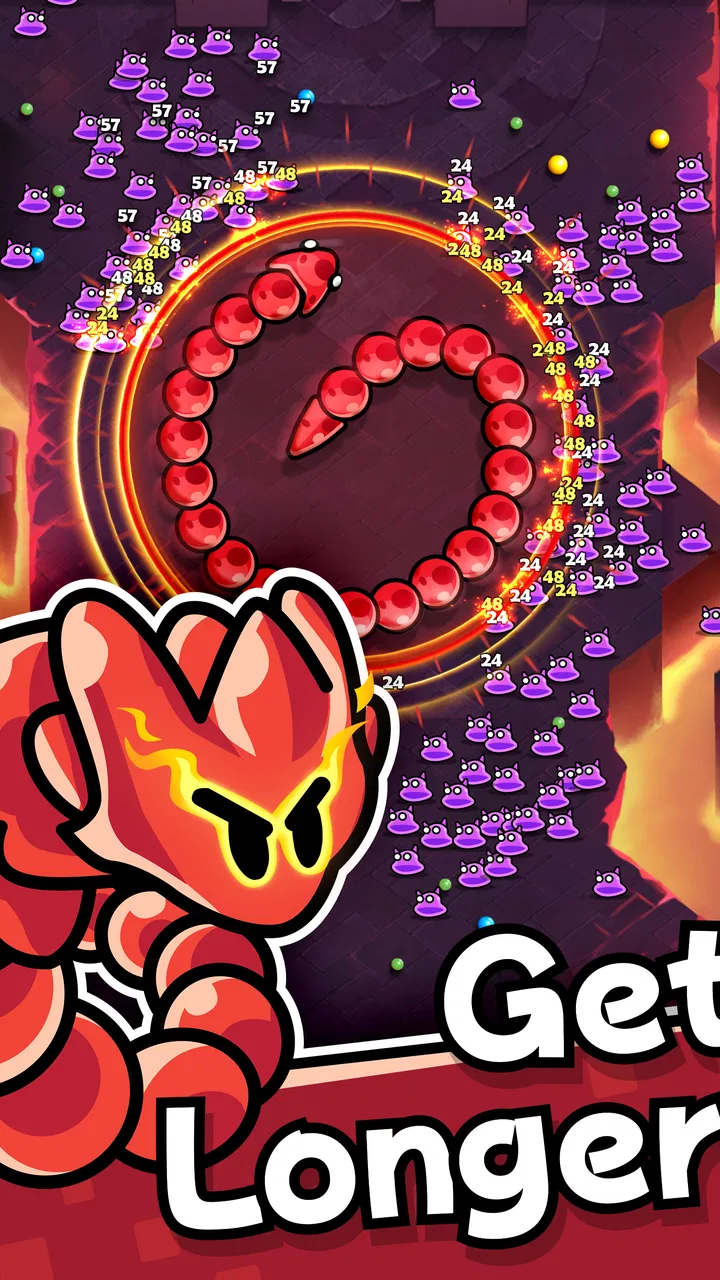
My first impression of SSSnaker was that it understands the appeal of a quick mobile game immediately. I move a snake-like character around an arena, collect upgrades, and deal with monsters while trying not to trap myself. That familiar idea becomes a casual roguelite with shooting, movement, and repeated runs. It is easy to start, but staying alive requires more attention than the cheerful presentation suggests.
After spending time with it, I found the game most interesting when I treated each run as a small experiment rather than a simple attempt to reach the end. The choices made during a session affect how safely I can control the arena, how quickly I can clear threats, and whether my growing body becomes an advantage or a liability. That gives the game more personality than a basic snake clone.
Habby developed the game, and its audience is already substantial: it has passed 5 million installs and holds a 4.2 average from about 87 thousand ratings. Those figures suggest that its central loop is easy for many players to understand. In my view, the more important question is not whether the opening is entertaining. It is whether the repeated structure gives me a reason to return once the novelty of steering, shooting, and upgrading has worn off.
You May Also Like

 Blood Strike: 2.5 Anniversary
Blood Strike’s Loadouts Turn Every Drop Into a Tactical Gamble
A close look at Blood Strike’s custom loadouts: how fast access to signature weapons reshapes its battle royale rhythm, rewards preparation, and narrows the gap between fights.

 Pandora - Music & Podcasts
Pandora’s Music Is Easy to Start, but Harder to Recover
Pandora’s strength is its low-effort path from a seed to a station. Its weak spot is how much confidence it asks you to place in connection, setup, and quiet recovery.

 8 Ball Pool
 Is Built on Rivalries, Rematches, and Routine
A close look at the rivalries, rematches, shared routines, and unanswered safety questions that turn a quick pool match into a persistent mobile community.

 Samsung Music
’s Quiet Strength Is Playing What You Already Own
Its reach comes less from spectacle than from dependable access to a personal library. That simplicity is both the app’s strongest retention engine and its ceiling.

 AccuWeather: Weather Radar
AccuWeather Review: A Quick, Clear Forecast for Everyday Decisions
For everyday plans, the best forecast is the one you can understand quickly. AccuWeather makes rain timing, radar, and local conditions easy to act on, with a few trade-offs.

 Hill Climb Racing
Why Hill Climb Racing Still Turns Crashes Into One More Run
A tiny car, a bumpy hill and one more upgrade: Hill Climb Racing keeps resurfacing because its simple chaos makes every near-miss feel personal.
More From Our News Desk



Why the first week feels so inviting
The opening sessions are built around a satisfying rhythm. I enter a compact combat space, steer continuously, watch attacks happen, and look for opportunities to strengthen the character. The controls do not ask me to manage a complicated interface while enemies are approaching. My attention stays on positioning, spacing, and the shape of the route I am creating.
That simplicity is a real strength for a casual game. I can play while waiting for an appointment or during a short break without needing a long tutorial session. At the same time, the snake body changes how I think about movement. A turn that looks harmless at the head can leave the rest of the body exposed, and a narrow path can become dangerous when enemies fill the available space.
The first week also benefits from the roguelite structure. A run is not only about surviving with a fixed toolset. I make temporary choices as I progress, and those choices encourage me to try different approaches. One run may feel safer when I prioritize control and room to maneuver; another may tempt me toward more aggressive damage. The best decisions are not always the ones that produce the biggest number immediately.
I particularly like the tension between collecting power and preserving movement. It is easy to focus on the next reward and forget that the arena is becoming more crowded. A stronger attack helps, but it does not automatically solve a poor route. This is one of the game’s more useful lessons: survival often depends on leaving yourself space before you need it.
The presentation supports short sessions without making the game feel like a spreadsheet. Enemies are visually clear enough for me to recognize danger while moving, and the action has a brisk, arcade-like pace. The theme is playful rather than serious, which makes failure easier to accept. I can restart after a bad run without feeling that I have lost a large block of time.
That quick restart loop is important for the first-week appeal. A failed attempt usually teaches me something about positioning, timing, or the value of a particular upgrade path. Even when I do not improve immediately, I understand why the run became difficult. That sense of readable failure is what kept me interested beyond the first few sessions.
The game is free to download, which lowers the barrier to trying it. It is rated for Everyone 10+, so it is aimed at a broad audience, although the constant combat and pressure may still be less suitable for very young children than the age label alone might suggest. In-app purchases range from $0.99 to $199.99 per item, so anyone considering spending should decide on a personal limit before the progression loop becomes familiar.
Small decisions that matter more than they first appear
A useful approach is to judge an upgrade by how it changes the next minute of movement, not just by its apparent offensive value. If an option helps clear enemies but makes me rely on risky turns, it may be worse than a modest improvement that keeps the arena open. This is especially relevant when several threats approach from different directions and the snake’s length limits escape routes.
I also learned not to chase every reward automatically. Collecting can pull the head toward the edge of a crowd, while the body follows through the same dangerous area. Sometimes the correct move is to circle through a safer lane and return later, even if that feels slower. That habit makes the game more manageable and is a practical difference between reacting to danger and preparing for it.
Another useful habit is to watch the arena rather than stare only at the character. The head naturally attracts attention, but the next collision may involve the body or a threat entering from outside the immediate focus. Keeping a wider view helps me avoid making a sharp turn that solves one problem and creates another. This is a small adjustment, yet it noticeably improves consistency.
What remains valuable after the novelty fades
After the first month, the question changes. The basic idea remains pleasant, but novelty no longer carries every session. At that point, the game needs to provide a reason to practice, experiment, or complete another run. For me, its recurring value comes from the combination of movement discipline and build choices rather than from the theme alone.
Every run asks me to balance three competing goals: increase damage, keep enough room to maneuver, and avoid becoming so focused on immediate rewards that I lose control of the arena. That balance gives the game a modest strategic layer. It is not a deep tactics title, and I would not choose it when I want a long-form story or complex planning, but it offers more thought than a purely automatic arcade game.
The game works particularly well as a routine filler. I can use it for a few attempts during a commute, after finishing a task, or when I want something interactive without committing to a large adventure. The short-run format makes it easier to stop than a game built around long missions. If I lose, the natural response is often “one more try,” but the time investment remains manageable.
For a realistic everyday example, I might open it during a ten-minute wait at a café. I can complete part of a run, pause my attention when my order arrives, and return later without needing to remember a complicated story. If I have more time, I can play several attempts and compare which upgrade choices kept the arena under control. That flexibility is a stronger long-term benefit than the novelty of the snake theme.
Compared with a traditional endless runner, this game gives me more control over the outcome. I am not simply avoiding obstacles along a fixed route; I am shaping movement around enemies and choosing how to develop the run. Compared with a standard match-three puzzle game, it is more active and less relaxing, because mistakes can arrive quickly and the screen demands continuous attention.
It also differs from a conventional twin-stick shooter. The snake-like body makes turning and positioning more consequential, so aiming well is not enough. Players who enjoy shooters but dislike the pressure of managing a vulnerable trail may find the movement frustrating. Conversely, people who like arcade games with unusual control problems may appreciate that extra layer.
The month-to-month value depends heavily on what I want from a mobile game. If I enjoy testing builds, improving survival, and repeating familiar situations with slightly different decisions, there is enough here to maintain a habit. If I need a constant stream of new environments, a strong narrative, or a clear finish line, the repeated-run format may feel thin after the initial enthusiasm.
That is also where the free-to-play structure deserves attention. The broad purchase range means the game can be sampled without payment, but the presence of optional spending can affect how comfortable the progression feels to different players. I prefer to treat purchases as a boundary decision rather than as part of ordinary play. The game is more enjoyable for me when I judge a run by my choices instead of by whether I can accelerate progress.
Maintenance, friction, and the reasons fatigue appears
The maintenance burden is fairly low in the practical sense. I do not need to learn a large control scheme, remember a long quest chain, or keep track of a complicated story between sessions. Returning after a few days feels straightforward because the central task is immediately clear: move carefully, manage threats, and make useful upgrade choices.
There is, however, a mental maintenance cost. Repeated runs demand attention, and the same core pattern can become tiring when I am not in the mood to react continuously. This is not a game I choose when I want to play passively. Even short sessions can feel busy because movement and danger remain active from beginning to end.
The upgrade loop can also create decision fatigue. Early choices feel exciting because they change the direction of a run. Later, if I have seen similar situations many times, selecting another improvement may feel more like routine maintenance than discovery. The game remains playable, but the emotional reward becomes smaller unless I set myself a specific goal, such as surviving more cleanly or avoiding reckless collection.
One source of fatigue is the tension between progress and repetition. Repeating runs is necessary to become better, yet repetition can expose the limits of the content loop. I sometimes found myself playing from habit rather than genuine curiosity. That is a sign that the game works best in controlled doses rather than as my only mobile game.
Another point of friction is the mismatch between visual simplicity and strategic pressure. The friendly style can make a run look uncomplicated, but crowded arenas punish careless movement quickly. New players may assume that stronger attacks will solve every problem, then become frustrated when positioning remains the deciding factor. The game rewards patience, but it does not always make that lesson obvious at first.
Players who dislike monetized progression should approach it carefully. The free entry is convenient, yet the listed purchase range reaches from small impulse amounts to very large individual items. I would not recommend opening the purchase screen casually or spending to fix every difficult run. A better routine is to play several sessions first, decide whether the core loop is genuinely enjoyable, and only then consider whether any optional purchase fits a fixed budget.
Device compatibility is reasonably accessible for older Android hardware because the minimum requirement is Android 6.0. The current version is 1.52.9, which is useful to know when checking whether a device can install and run it. I would still expect the experience to depend on the phone’s age and performance, particularly during busy combat, so players using older devices should keep their expectations practical.
The game is not the right choice for someone seeking a calm puzzle that can be played with almost no pressure. It is also a weak fit for players who want a one-time premium purchase with no temptation to spend further. Fans of long campaigns may prefer a role-playing game or a more traditional action title, while players who want pure endless-runner simplicity may find the snake-body positioning more demanding than expected.
How I would build a sustainable playing habit
I get more lasting value when I give each session a purpose. Instead of playing until I feel bored, I might focus on improving route planning, testing whether a defensive choice keeps me alive longer, or practicing restraint around rewards. This turns repetition into deliberate practice and prevents every run from blending into the next.
I also recommend stopping after a frustrating streak rather than immediately trying to recover the loss. The game’s quick restart design encourages repeated attempts, but anger makes me chase rewards and take unsafe turns. A short break usually helps more than another impulsive run. That is a small but important maintenance habit for any game built around repeated failure.
Finally, I would keep it alongside a contrasting game. SSSnaker supplies movement and quick decisions; a slower puzzle or narrative game can provide a different kind of attention. That combination makes it easier to return with interest instead of turning the same combat loop into background noise.
My long-term verdict on keeping it installed
SSSnaker earns a place on my phone when I want a compact action game with more positioning nuance than its simple premise suggests. Habby has made the snake concept useful rather than merely decorative: the body affects routes, mistakes, and the way I value upgrades. The result is approachable in the first week but not completely empty once the initial surprise disappears.
Its lasting strength is the relationship between movement and decision-making. I cannot rely on damage alone, and I cannot treat the arena as a harmless collection path. Good play means preserving escape space, reading the whole screen, and choosing improvements that support the way I actually move. Those lessons give repeated sessions a reason to exist.
Its lasting weakness is repetition. The same loop that makes it convenient can eventually make it feel like maintenance. Players who need constant novelty will probably move on, and those uncomfortable with in-app purchase ranges may not enjoy the surrounding progression atmosphere. I also would not call it a relaxing choice, despite its casual classification, because active steering keeps the mind engaged.
With a free price, an Everyone 10+ rating, and a compact structure, it is easy to recommend trying. I would recommend keeping spending firmly controlled and treating the game as a short-session habit rather than a permanent daily obligation. The install date, March 19, 2023, places it beyond the launch novelty stage, while its ongoing version 1.52.9 shows that it remains an active option for players browsing casual games.
My final judgment is positive but measured. This is a good fit for someone who wants an arcade roguelite that can be learned quickly, played in small gaps, and improved through better movement rather than reflexes alone. It is not the best fit for a player searching for a deep campaign, a quiet puzzle, or a purchase-once experience. If you enjoy the first week and still find yourself thinking about safer routes and better upgrade choices after several sessions, it has earned a lasting spot. If you are only chasing the initial novelty of controlling a snake, the appeal may fade sooner.
FAQs for SSSnaker
01What is SSSnaker, and how does the gameplay work?
SSSnaker is a mobile action game that combines classic snake movement with roguelike shooting mechanics. You control a snake-like character through dangerous stages, collect upgrades, defeat waves of enemies, and face powerful bosses. The snake grows and becomes stronger as you progress, while movement, positioning, and choosing the right abilities are essential for surviving increasingly difficult levels.
02Is SSSnaker free to download and play?
SSSnaker can generally be downloaded for free on Android and iOS, but it includes optional in-app purchases. These purchases may provide currencies, upgrade materials, character improvements, or other progression benefits. The game can be played without spending money, although free players may experience slower progress, longer upgrade times, and more difficulty when attempting advanced stages.
03Does SSSnaker require an internet connection?
An internet connection may be required for several important features in SSSnaker, including account synchronization, advertisements, events, rewards, updates, and in-app purchases. Some gameplay elements might work temporarily offline, but the experience is not guaranteed to be fully available without connectivity. For the most reliable access to progress and current events, playing online is recommended.
04Are there advertisements or in-app purchases in SSSnaker?
Yes, SSSnaker includes advertising and optional in-app purchases. Advertisements may appear between activities or be offered in exchange for extra rewards, such as additional resources or revival opportunities. Purchases can accelerate progression and improve access to upgrades, but they are not strictly necessary at the beginning. Players should review device payment settings before allowing purchases.
05Is SSSnaker suitable for children and casual players?
SSSnaker is relatively easy to understand because its basic controls are simple, but the game becomes progressively more challenging as enemies, bosses, and upgrade choices become more demanding. It may suit casual players who enjoy short action sessions, though younger users may need supervision because of advertisements and optional purchases. Parents should also check the game's age rating and privacy information.
Pros
- Smooth controls make weaving through enemy groups feel responsive.
- Runs well on many mid-range devices without demanding high-end hardware.
- Frequent stage rewards help maintain progress even during short sessions.
- Distinct snake skins and upgrades add useful visual customization.
- Offline play is convenient when you do not have a stable connection.
Cons
- Random upgrade choices can make some runs feel dependent on luck.
- Later chapters may require repeated farming to improve your snake.
- Touch controls can feel cramped during crowded boss encounters.
- Some visual effects may obscure hazards when the screen becomes busy.
- The game can consume noticeable battery during longer play sessions.

SSSnaker
Gallery